
Shoreline Erosion Explained: Why Your Lakefront Bank Is Disappearing and What You Can Do
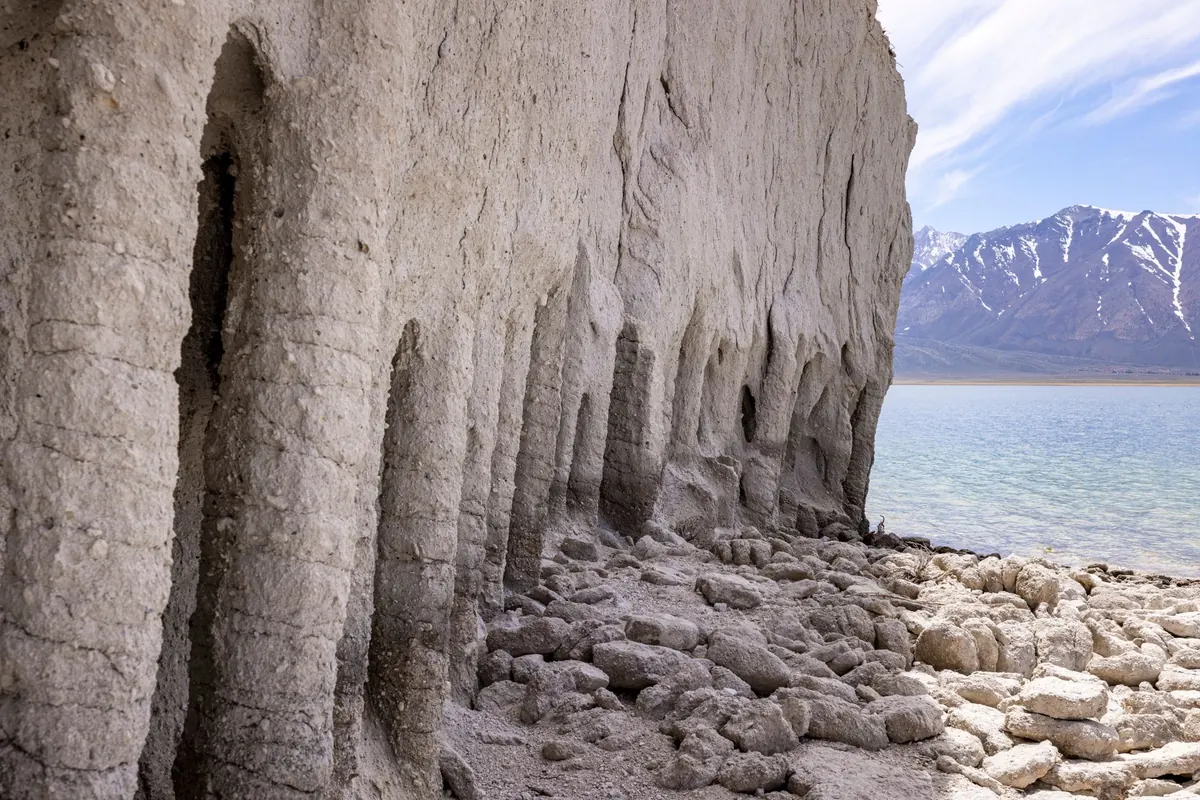
You bought the place for the view, and lately the view has been eating itself. A foot of lawn vanished over the winter. The maple you used to sit under now leans toward open water, its roots hanging in the air like a bundle of wires. Shoreline erosion rarely announces itself in one dramatic collapse; it works in increments, then one spring the bank slumps and you understand this is not going to fix itself.
The encouraging part: most bank loss can be slowed, and sometimes reversed, once you stop treating it as a landscaping problem and start treating it as a water problem.
What's Actually Taking Your Bank Away
Erosion is energy looking for somewhere to go. On a lake, that energy usually arrives in one of four ways.
Wave action. The distance of open water in front of your property — the fetch — determines how much wave energy reaches your shore. A short, sheltered bay barely ripples. A half-mile of open water in a prevailing wind direction produces waves that slap the bank thousands of times a day, and every slap lifts a little soil and carries it away.
Ice. In cold climates, ice does more damage in three months than waves do in nine. Ice sheets expand and push against the bank, shoving soil and stone up the slope. When the thaw comes, chunks of frozen bank calve off and float away. The freeze-thaw cycle also loosens soil that spring runoff then carries off.
Boat wakes. A wake hits the bank lower and harder than a wind wave of the same height, and it arrives with no warning. If your shoreline is a popular route, wakes may be your primary problem. Slowing down within a few hundred feet of shore is the cheapest erosion control on the lake.
Water from the land. Downspouts, paved driveways, cleared slopes and mowed lawns all deliver runoff fast. Water that once soaked into leaf litter and root systems now sheets across the bank, cutting gullies and saturating the soil until a whole block of it slides. High water that saturates the toe of the bank, followed by a drawdown that leaves it unsupported, is a common recipe for a slump.
The Warning Signs Most Owners Miss
Erosion has a tell. Walk your shoreline once a month with your eyes down, and you'll catch problems while they're still cheap to fix.
- An undercut lip, with grass overhanging nothing but air
- Exposed roots, and trees whose trunks have begun to lean toward the water
- A vertical scarp a foot or more high along the waterline
- Fresh cracks running parallel to the bank edge, which often mean a block is preparing to slide
- Sunken, tilted or drifting docks, stairs and fence posts
- Water pooling at the top of the bank after rain instead of soaking in
- Bare soil with no leaf litter, mowed right to the edge
- Muddy water near your shore on calm days, not just after storms
Photograph the same three or four spots twice a year, every year. Two photos a season apart will tell you more than memory ever will. If something has clearly moved, act before the next spring melt.
Start With the Soil and the Slope
What your bank is made of sets the rules. Sand drains quickly and slides easily. Silt erodes fast and stays suspended in the water. Clay can hold a near-vertical face for years — then let go all at once in a single wet week. If your water is famously clear and your bank is mostly sand, expect trouble.
Slope matters just as much. A bank steeper than about two feet horizontal to one foot vertical is working hard to stay put. Watch for seeps: spots that stay green in August, or that trickle after rain, are groundwater escaping through the face. Water pushing out from inside a bank is one of the most common triggers for a slump, and no amount of stone on the surface will solve it.
Natural Fixes That Work With the Lake
Vegetation is the cheapest armor you can install, and it gets stronger every year. Deep-rooted natives — willows, red-osier dogwood, alder, sedges, rushes, switchgrass — knit the soil together above and below the waterline. A buffer of unmowed, unraked growth just ten to twenty feet wide slows runoff, filters nutrients and absorbs wave energy before it reaches bare soil.
Where the toe of the bank is already undercut, combine planting with simple bioengineering:
- Take dormant cuttings of willow or dogwood in late fall or early spring, pencil to thumb thickness and about 18 to 24 inches long. Cut the bottom square and the top at an angle so you can tell which end is up.
- Push them into the bank two-thirds deep, spaced roughly a foot apart, angled slightly upstream. They root and leaf out the following season.
- Stake a coir log — a roll of coconut fiber — along the waterline to trap sediment and shelter new growth. Bury it slightly so waves can't lift it.
- Water the plantings through a dry first summer, and keep the mower and string trimmer well away.
This approach looks messy for a season. Give it two, and it will outperform anything you could have bought.
When Hard Armor Makes Sense
Sometimes you need stone. A tight property with no room for a planted slope, a bank already vertical, or a shoreline taking heavy wakes may justify riprap. Done well, riprap is angular stone laid on a filter layer — geotextile fabric or graded gravel — with a keyed toe buried below the waterline and the slope graded to about two feet horizontal for every foot vertical. The stone must be sized for the wave energy at your site; undersized rock simply walks away.
Most riprap failures come from skipping the filter layer, piling stone on a steep face, or armoring only part of the bank so waves attack the unprotected ends. Seawalls and sheet piling reflect wave energy rather than absorbing it, which often means scour in front and at the flanks, and they're expensive to repair. They have their place, but they're engineering decisions, not weekend projects.
Permits First, Always
In most places, any work below the ordinary high-water mark — stone, logs, excavation, sometimes even planting — requires a permit from a state or provincial environmental agency, a local conservation authority or a federal regulator. Rules vary widely from one lake and one jurisdiction to the next, and unpermitted work can mean fines and an order to remove what you built. Call your local authority before you move a single bucket of soil, and ask what they recommend for your shoreline type. This isn't legal advice; it's the phone call that saves you a season of rework.
A Simple Plan for the Next Season
- Walk the shoreline and mark the worst twenty feet. Identify whether waves, ice, wakes or upland runoff is doing the damage.
- Fix the water coming from the land first: extend downspouts, divert runoff into a swale or rain garden, and stop mowing the last fifteen feet.
- Plant the buffer with deep-rooted natives suited to your region, and add live stakes where the toe is undercut.
- If the bank needs stone, hire someone who has built shoreline structures on your lake, and secure the permit before work begins.
- Photograph the same spots every spring and fall, and repair small failures before they become expensive ones.
Erosion is patient. So is a well-rooted bank. Start with the free fixes — the mower, the downspout, the phone call about permits — and let the plants do the heavy lifting while you decide how much structure you truly need.
Photo: Stephen Leonardi / Pexels